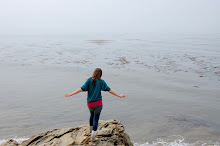
“It doesn’t interest me what you do for a living. I want to know what you ache for, and if you dare to dream of meeting your heart’s longing. It doesn’t interest me how old you are. I want to know if you will risk looking like a fool for love, for your dream, for the adventure of being alive. It doesn’t interest me what planets are squaring your moon. I want to know if you have touched the center of your own sorrow, if you have been opened by life’s betrayals or have become shriveled and closed from fear of further pain! I want to know if you can sit with pain, mine or your own, without moving to hide it or fade it. I want to know if you can be with joy, mine or your own, if you can dance with wildness and let the ecstasy fill you to the tips of your fingers and toes without cautioning us to be careful, to be realistic, to remember the limitations of being human. It doesn’t interest me if the story you are telling me is true. I want to know if you can disappoint another to be true to yourself; if you can bear the accusation of betrayal and not betray your own soul; if you can be faithless and therefore trustworthy. I want to know if you can see beauty even when it’s not pretty, every day, and if you can source your own life from its presence. I want to know if you can live with failure, yours and mine, and still stand on the edge of the lake and shout to the silver of the full moon, “Yes!” It doesn’t interest me to know where you live or how much money you have. I want to know if you can get up, after the night of grief and despair, weary and bruised to the bone, and do what needs to be done to feed the children. It doesn’t interest me who you know or how you came to be here. I want to know if you will stand in the center of the fire with me and not shrink back. It doesn’t interest me where or what or with whom you have studied. I want to know what sustains you, from the inside, when all else falls away. I want to know if you can be alone with yourself and if you truly like the company you keep in the empty moments.”
-Oriah Mountain Dreamer
Thursday, August 12, 2010

Sunday, July 25, 2010
so simple
“What is so simple as eating an apple? And yet, what could be more sacred or profound? When we eat an apple we are not just eating an apple as a separate thing. The apple enters us, dissolves within us, contributes to us, and becomes us. Each apple is a manifestation of so much more! We are eating the rain and the clouds and of all the trees that have gone before to bring this tree into manifestation, and of the tears, sweat, bodies, and breaths of countless generations of animals, plants, and people that have become the rain and soul and wind that feed the apple tree.
When we look into an apple, we see the entire universe. All the planets and stars, our sun and moon, the oceans, rivers, forests, fields, and creatures are in this apple. The tree is a manifestation of an infinite web of life, and for the tree to exist, every component of the web is vital. The apple is the gift of the tree and of the infinite universe propagating and celebrating itself through the apple. The seeds fall to become new trees, or are eaten by humans or bears or birds and thus distributed more widely, spreading and benefiting the tree and the whole system, unfolding in utter vastness, complexity, and perfection.
If we become aware of this when we eat an apple, we will know we are loved and nourished, and that we are part of something greater, a mystery so immense and benevolent and exciting that we can only be touched by the sense of sacredness.
We humans, eating apples, are in a true sense apples eating apples. The whole universe is not only in every apple but in every one of us. In eating, we see that there are no fundamentally separate things at all, but only processes. All things partake of each other, ever changing, and are eventually eaten by the process and by time, the great devourer. Food is the source and metaphor of the flow of life into death and of death into life”
-The World Peace Diet
When we look into an apple, we see the entire universe. All the planets and stars, our sun and moon, the oceans, rivers, forests, fields, and creatures are in this apple. The tree is a manifestation of an infinite web of life, and for the tree to exist, every component of the web is vital. The apple is the gift of the tree and of the infinite universe propagating and celebrating itself through the apple. The seeds fall to become new trees, or are eaten by humans or bears or birds and thus distributed more widely, spreading and benefiting the tree and the whole system, unfolding in utter vastness, complexity, and perfection.
If we become aware of this when we eat an apple, we will know we are loved and nourished, and that we are part of something greater, a mystery so immense and benevolent and exciting that we can only be touched by the sense of sacredness.
We humans, eating apples, are in a true sense apples eating apples. The whole universe is not only in every apple but in every one of us. In eating, we see that there are no fundamentally separate things at all, but only processes. All things partake of each other, ever changing, and are eventually eaten by the process and by time, the great devourer. Food is the source and metaphor of the flow of life into death and of death into life”
-The World Peace Diet
Thursday, July 1, 2010
Excerpt from "The Book of Understanding"
No religion has been courageous enough to say, "We know this much, but there is much we don't know; perhaps in the future we may know it. And beyond that, there is a space which is going to remain unknowable forever."
A true religion will have the humbleness to admit that only a few things are known, much more is unknown, and something will always remain unknowable. That "something" is the target of the whole spiritual search. You cannot make it an object of knowledge, but you can experience it, you can drink of it, you can have the taste of it - it is existential.
All these religions have been against doubt. They have been really afraid of doubt. Only an impotent intellect can be afraid of doubt; otherwise doubt is a challenge, an opportunity to inquire.
There is doubt, and doubt is not destroyed by believing. Doubt is destroyed by experiencing.
They say, believe. I say, explore. They say, don't doubt; I say, doubt to the very end, till you arrive and know and feel and experience. Then there is no need to repress doubt; it evaporates by itself. Then there is no need for you to believe.
You have to be again innocent, ignorant, not knowing anything, so that the questions can start arising again. Again the inquiry becomes alive, and with the inquiry becoming alive you cannot vegetate. Then life becomes an exploration, an adventure.
-OSHO
A true religion will have the humbleness to admit that only a few things are known, much more is unknown, and something will always remain unknowable. That "something" is the target of the whole spiritual search. You cannot make it an object of knowledge, but you can experience it, you can drink of it, you can have the taste of it - it is existential.
All these religions have been against doubt. They have been really afraid of doubt. Only an impotent intellect can be afraid of doubt; otherwise doubt is a challenge, an opportunity to inquire.
There is doubt, and doubt is not destroyed by believing. Doubt is destroyed by experiencing.
They say, believe. I say, explore. They say, don't doubt; I say, doubt to the very end, till you arrive and know and feel and experience. Then there is no need to repress doubt; it evaporates by itself. Then there is no need for you to believe.
You have to be again innocent, ignorant, not knowing anything, so that the questions can start arising again. Again the inquiry becomes alive, and with the inquiry becoming alive you cannot vegetate. Then life becomes an exploration, an adventure.
-OSHO
Thursday, June 24, 2010
Praise Song for the Day
Each day we go about our business,
walking past each other, catching each other’s
eyes or not, about to speak or speaking.
All about us is noise. All about us is
noise and bramble, thorn and din, each
one of our ancestors on our tongues.
Someone is stitching up a hem, darning
a hole in a uniform, patching a tire,
repairing the things in need of repair.
Someone is trying to make music somewhere,
with a pair of wooden spoons on an oil drum,
with cello, boom box, harmonica, voice.
A woman and her son wait for the bus.
A farmer considers the changing sky.
A teacher says, Take out your pencils. Begin.
We encounter each other in words, words
spiny or smooth, whispered or declaimed,
words to consider, reconsider.
We cross dirt roads and highways that mark
the will of some one and then others, who said
I need to see what’s on the other side.
I know there’s something better down the road.
We need to find a place where we are safe.
We walk into that which we cannot yet see.
Say it plain: that many have died for this day.
Sing the names of the dead who brought us here,
who laid the train tracks, raised the bridges,
picked the cotton and the lettuce, built
brick by brick the glittering edifices
they would then keep clean and work inside of.
Praise song for struggle, praise song for the day.
Praise song for every hand-lettered sign,
the figuring-it-out at kitchen tables.
Some live by love thy neighbor as thyself,
others by first do no harm or take no more
than you need. What if the mightiest word is love?
Love beyond marital, filial, national,
love that casts a widening pool of light,
love with no need to pre-empt grievance.
In today’s sharp sparkle, this winter air,
any thing can be made, any sentence begun.
On the brink, on the brim, on the cusp,
praise song for walking forward in that light.
-Elizabeth Alexander
walking past each other, catching each other’s
eyes or not, about to speak or speaking.
All about us is noise. All about us is
noise and bramble, thorn and din, each
one of our ancestors on our tongues.
Someone is stitching up a hem, darning
a hole in a uniform, patching a tire,
repairing the things in need of repair.
Someone is trying to make music somewhere,
with a pair of wooden spoons on an oil drum,
with cello, boom box, harmonica, voice.
A woman and her son wait for the bus.
A farmer considers the changing sky.
A teacher says, Take out your pencils. Begin.
We encounter each other in words, words
spiny or smooth, whispered or declaimed,
words to consider, reconsider.
We cross dirt roads and highways that mark
the will of some one and then others, who said
I need to see what’s on the other side.
I know there’s something better down the road.
We need to find a place where we are safe.
We walk into that which we cannot yet see.
Say it plain: that many have died for this day.
Sing the names of the dead who brought us here,
who laid the train tracks, raised the bridges,
picked the cotton and the lettuce, built
brick by brick the glittering edifices
they would then keep clean and work inside of.
Praise song for struggle, praise song for the day.
Praise song for every hand-lettered sign,
the figuring-it-out at kitchen tables.
Some live by love thy neighbor as thyself,
others by first do no harm or take no more
than you need. What if the mightiest word is love?
Love beyond marital, filial, national,
love that casts a widening pool of light,
love with no need to pre-empt grievance.
In today’s sharp sparkle, this winter air,
any thing can be made, any sentence begun.
On the brink, on the brim, on the cusp,
praise song for walking forward in that light.
-Elizabeth Alexander
LOVE
“As we expand, we melt. Our hearts open. Our thinking changes. Our obsessions subside, our addictions quietly pass away. This is the slow, elegant, loving process through which, little by little, we let go of the old and welcome the new. We open our hearts and allow in a few more people, just a few more relationship experiences, just a few more kinds of relationships. We learn there are no mistakes, and our hearts become a circle so large that there are no more boundaries, no differences, no judgments. We know the graciousness of that great undivided familiarity, in which there are no more strangers, only friends. We stretch, and to our amazement we don’t break. Instead, we grow. Suddenly, everything becomes easier, and our hearts, which once we believed could love only one person, or were battered so badly we thought they could never love again, expand so fully that the whole world is welcome. In such a state of openness, we see that we’ve only forgotten how to be together, we faintly and beautifully remember that once we were all together. We remember the way we were in a universe of incredible softness where there were no edges, no walls, no mind games, no rules. In that incredible world, we were happy. We loved one another. It wasn’t a feeling. It was a state of being called joy.
The future of love is this all-encompassing embrace. For when we have expanded so much, we will finally arrive at a place where the heart can open its doors to everything and everyone. Our souls have been taking us on this journey and Love is the magnificent destination to which they have been leading us. Now we can feel joy. Now, at last, we can be satisfied. Now, finally, we are home.”
-Daphne Rose Kingma
The future of love is this all-encompassing embrace. For when we have expanded so much, we will finally arrive at a place where the heart can open its doors to everything and everyone. Our souls have been taking us on this journey and Love is the magnificent destination to which they have been leading us. Now we can feel joy. Now, at last, we can be satisfied. Now, finally, we are home.”
-Daphne Rose Kingma
Saturday, June 19, 2010
The Art of Not Being Offended
In order to truly be a master of this art, one must be able to see that every statement, action and reaction of another human being is the sum result of their total life experience to date. In other words, the majority of people in our world say and do what they do from their own set of fears, conclusions, defenses and attempts to survive. Most of it, even when aimed directly at us, has nothing to do with us. Usually, it has more to do with all the other times, and in particular the first few times, that this person experienced a similar situation, usually when they were young. Yes, this is psychodynamic. But let’s face it, we live in a world where psychodynamics are what make the world go around. An individual who wishes to live successfully in the world as a spiritual person really needs to understand that psychology is as spiritual as prayer. In fact, the word psychology literally means the study of the soul.
All of that said, almost nothing is personal. Even with our closest loved ones, our beloved partners, our children and our friends. We are all swimming in the projections and filters of each others’ life experiences and often we are just the stand-ins, the chess pieces of life to which our loved ones have their own built-in reactions. This is not to dehumanize life or take away the intimacy from our relationships, but mainly for us to know that almost every time we get offended, we are actually just in a misunderstanding. A true embodiment of this idea actually allows for more intimacy and less suffering throughout all of our relationships. When we know that we are just the one who happens to be standing in the right place at the right psychodynamic time for someone to say or do what they are doing—we don’t have to take life personally. If it weren’t us, it would likely be someone else.
This frees us to be a little more detached from the reactions of people around us. How often do we react to a statement of another by being offended rather than seeing that the other might actually be hurting? In fact, every time we get offended, it is actually an opportunity to extend kindness to one who may be suffering—even if they themselves do not appear that way on the surface. All anger, all acting out, all harshness, all criticism, is in truth a form of suffering. When we provide no Velcro for it to stick, something changes in the world. We do not even have to say a thing. In fact, it is usually better not to say a thing. People who are suffering on the inside, but not showing it on the outside, are usually not keen on someone pointing out to them that they are suffering. We do not have to be our loved one’s therapist. We need only understand the situation and move on. In the least, we ourselves experience less suffering and at best, we have a chance to make the world a better place.
This is also not to be confused with allowing ourselves to be hurt, neglected or taken advantage of. True compassion does not allow harm to ourselves either. But when we know that nothing is personal, a magical thing happens. Many of the seeming abusers of the world start to leave our lives. Once we are conscious, so-called abuse can only happen if we believe what the other is saying. When we know nothing is personal, we also do not end up feeling abused. We can say, “Thank you for sharing,” and move on. We are not hooked by what another does or says, since we know it is not about us. When we know that our inherent worth is not determined by what another says, does or believes, we can take the world a little less seriously. And if necessary, we can just walk away without creating more misery for ourselves or having to convince the other person that we are good and worthy people.
The great challenge of our world is to live a life of contentment, regardless of what other people do, say, think or believe. The fine art of not being offended is one of the many skills for being a practical mystic. Though it may take a lifetime of practice, it is truly one of the best kept secrets for living a happy life.
-Dr. Jodi Prinzivalli
All of that said, almost nothing is personal. Even with our closest loved ones, our beloved partners, our children and our friends. We are all swimming in the projections and filters of each others’ life experiences and often we are just the stand-ins, the chess pieces of life to which our loved ones have their own built-in reactions. This is not to dehumanize life or take away the intimacy from our relationships, but mainly for us to know that almost every time we get offended, we are actually just in a misunderstanding. A true embodiment of this idea actually allows for more intimacy and less suffering throughout all of our relationships. When we know that we are just the one who happens to be standing in the right place at the right psychodynamic time for someone to say or do what they are doing—we don’t have to take life personally. If it weren’t us, it would likely be someone else.
This frees us to be a little more detached from the reactions of people around us. How often do we react to a statement of another by being offended rather than seeing that the other might actually be hurting? In fact, every time we get offended, it is actually an opportunity to extend kindness to one who may be suffering—even if they themselves do not appear that way on the surface. All anger, all acting out, all harshness, all criticism, is in truth a form of suffering. When we provide no Velcro for it to stick, something changes in the world. We do not even have to say a thing. In fact, it is usually better not to say a thing. People who are suffering on the inside, but not showing it on the outside, are usually not keen on someone pointing out to them that they are suffering. We do not have to be our loved one’s therapist. We need only understand the situation and move on. In the least, we ourselves experience less suffering and at best, we have a chance to make the world a better place.
This is also not to be confused with allowing ourselves to be hurt, neglected or taken advantage of. True compassion does not allow harm to ourselves either. But when we know that nothing is personal, a magical thing happens. Many of the seeming abusers of the world start to leave our lives. Once we are conscious, so-called abuse can only happen if we believe what the other is saying. When we know nothing is personal, we also do not end up feeling abused. We can say, “Thank you for sharing,” and move on. We are not hooked by what another does or says, since we know it is not about us. When we know that our inherent worth is not determined by what another says, does or believes, we can take the world a little less seriously. And if necessary, we can just walk away without creating more misery for ourselves or having to convince the other person that we are good and worthy people.
The great challenge of our world is to live a life of contentment, regardless of what other people do, say, think or believe. The fine art of not being offended is one of the many skills for being a practical mystic. Though it may take a lifetime of practice, it is truly one of the best kept secrets for living a happy life.
-Dr. Jodi Prinzivalli
Thursday, June 17, 2010
excerpted from The PowerBook
“Love wounds. There is no love that does not pierce the hands and feet. Love’s exquisite happiness is also love’s exquisite pain. I do not seek pain but there is pain. I do not seek suffering but there is suffering. It is better not to flinch, not to try and avoid those things in love’s direction. It is not easy, this love, but only the impossible is worth the effort. In the Grail legends Lancelot, the best knight in the world, never does see the Grail because he cannot give up his love for Guinevere. As a moral essay this suggests that human passion is no substitute for divine love and that it prevents us from experiencing love fully. This has been the basis of Christian thought since St Paul. There is another reading. Lancelot fails, not because he can’t give up Guinevere, but because he can’t distinguish between love’s symbol and what it represents. All human love is a dramatic enactment of the wild, reckless, unquenchable, undrainable love that powers the universe. If death is everywhere and inescapable, then so is love, if we but knew it. We can begin to know it through each other. The tamer my love, the farther away it is from love. In fierceness, in heat, in longing, in risk, I find something of love’s nature. In my desire for you, I burn at the right temperature to walk through love’s fire. So when you ask my why I can’t love you more calmly, I answer that to love you calmly is not to love you at all.”
Jeanette Winterson
Jeanette Winterson
Subscribe to:
Posts (Atom)